

How To Clean and Maintain Your Vehicle’s Window Tint
Window tint can improve your driving experience while giving your vehicle a polished, finished appearance. However, tinted windows need the right cleaning methods to stay clear, smooth, and attractive over time.
Using harsh products or abrasive materials can damage tint film and shorten its useful life. A careful maintenance routine helps protect your investment without complicating window care.
Drivers do not need specialized equipment or an extensive cleaning routine to clean and maintain tinted windows . A few smart product choices and gentle cleaning techniques can make a big difference in the film's condition. With consistent care, you can keep your vehicle’s windows looking clean without putting unnecessary stress on the tint.
Let New Window Tint Cure Before Cleaning
Freshly installed window tint needs time to cure before you clean or handle it extensively. During this period, the adhesive continues to settle against the glass, so disturbing the film too soon can interfere with the final result. You may also notice a slightly hazy appearance or small pockets of moisture shortly after installation. Avoid pressing or rubbing these areas while the tint settles.
Follow the care instructions your installer provides because curing conditions can vary with temperature, humidity, film type, and other factors. Resist the urge to scrub the glass simply because you notice temporary visual changes after installation.
You should also avoid lowering newly tinted windows until your installer says you can safely do so. Giving the film adequate time to settle creates a better foundation for long-term maintenance.
Choose a Tint-Safe Window Cleaner
The cleaner you choose matters because the film sits directly against the glass's interior surface. Harsh chemicals may affect certain tint films or adhesives over repeated use. Instead of reaching for a household glass cleaner, choose a gentle cleaner that removes everyday residue without exposing the film to unnecessary chemicals.
Ammonia-free automotive glass cleaners commonly offer a tint-friendly option, but always verify the specific product before applying it. You also do not need to saturate the glass to achieve a clean surface.
A controlled amount of cleaner helps prevent liquid from collecting around window seals and interior trim. If you're unsure about a product, ask your tint installer what they recommend for routine care.

Use Soft Materials on Tinted Windows
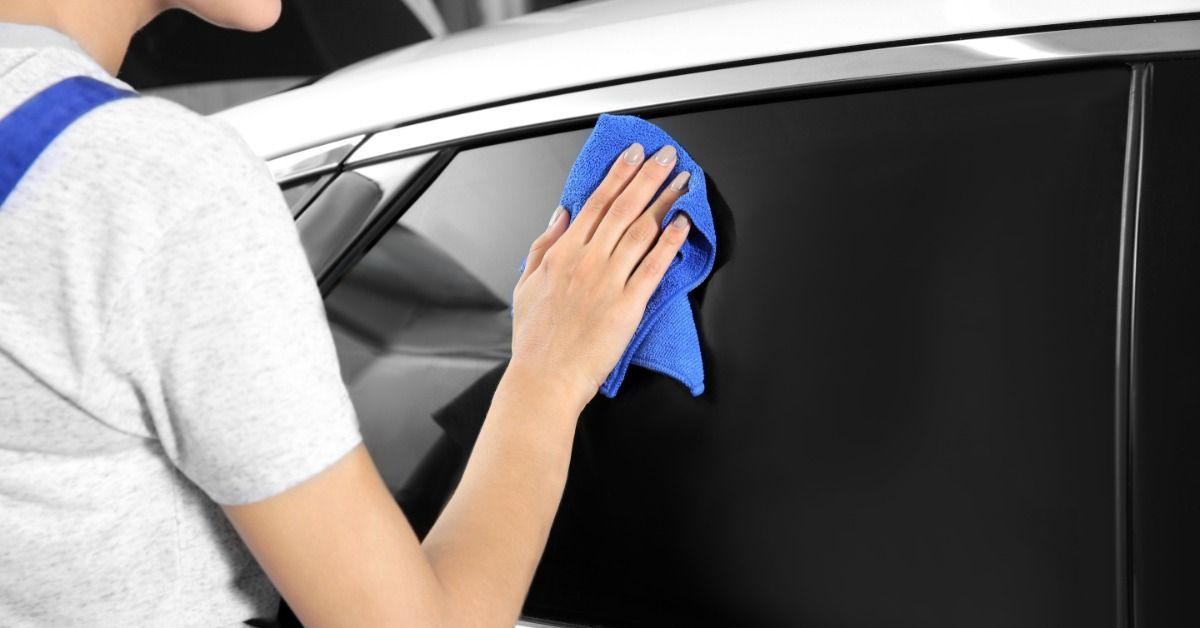
A good cleaner only solves half of the equation because your cleaning material also touches the film directly. Rough towels, abrasive pads, and dirty cloths can leave scratches or marks across the surface. Choose clean microfiber towels that feel soft and contain no trapped grit. Keep separate towels for glass, rather than grabbing one previously used on wheels, paint, or other dirty surfaces.
Before wiping a tinted window, inspect the towel for particles that could drag across the film. Fold the microfiber into sections so you can switch to a fresh side as it accumulates dirt. Use one towel to clean the glass and another clean, dry towel for the final wipe. This simple technique reduces streaking while limiting repeated contact with the tint.
Follow a Gentle Cleaning Process
Tinted windows rarely require aggressive scrubbing during normal maintenance. Spray an appropriate amount of cleaner onto a microfiber towel or apply it carefully to the glass, then wipe with light, controlled movements.
A simple routine can help protect the tint every time you clean:
- Park in a shaded area and allow hot glass to cool.
- Use a clean, soft microfiber towel.
- Apply a tint-safe, ammonia-free cleaning product.
- Wipe gently without aggressive scrubbing.
- Use a fresh towel to remove remaining moisture and streaks.
- Check the window edges for dirt without picking at the film.
Working carefully takes only a little extra time. The goal is to remove contamination without creating unnecessary friction against the tinted surface.
Pay Attention to the Edges of the Tint
Window film edges deserve extra care because aggressive cleaning can stress them. Avoid catching the film's edge with a fingernail, towel seam, scraper, or cleaning tool. When wiping near the top or sides of a window, use gentle movements that do not push directly against the film edge. Small technique adjustments can help prevent accidental lifting.
Dirt sometimes collects around window seals and where the glass meets interior trim. Clean these locations carefully rather than forcing a towel deep into tight gaps. If you notice an edge that appears loose, resist the temptation to press or repair it yourself. Contact a professional who can inspect the area and determine the appropriate next step.
Avoid Scrapers and Abrasive Cleaning Tools
Stubborn residue can make a scraper or abrasive pad seem like the fastest solution, but these tools can create permanent damage. Tint film doesn't tolerate the same aggressive treatment untreated glass sometimes gets.
Sharp objects can cut the material, while abrasive pads may leave fine scratches across an otherwise clear window. Even one careless cleaning session can affect the film’s appearance.
For difficult spots, start with a tint-safe cleaner and a soft microfiber towel. Let the cleaning solution loosen the residue, then wipe gently rather than scraping it away. If adhesive or another substance will not come off safely, consider professional assistance. Protecting the film should take priority over removing a stubborn spot as quickly as possible.

Keep Interior Contaminants Under Control
Clean windows stay cleaner when you also maintain the rest of the vehicle’s interior. Dust from the dashboard, fingerprints from passengers, pet residue, and airborne contaminants can quickly return to freshly cleaned glass.
Regular interior detailing reduces the amount of material that eventually settles on tinted windows. It can also make each routine window cleaning session quicker and easier.
Watch for habits that repeatedly leave marks on the glass. Children and pets, for example, may leave fingerprints, nose marks, or other residue that requires more frequent attention. Address these spots with gentle cleaning rather than allowing layers of grime to build up. Consistent light maintenance usually works better than infrequent, aggressive cleaning.
Know When Your Window Tint Needs Professional Attention
Routine cleaning can preserve the appearance of tint, but maintenance cannot correct every problem. Bubbling, peeling, deep scratches, unusual discoloration, or damaged edges may indicate that the film needs professional evaluation. DIY repairs can make the damage more noticeable and complicate proper removal or replacement.
A professional can inspect the film's condition and explain whether it needs repair or replacement. A1 Auto Detailing offers window tinting services as part of our vehicle care and protection options in Lynnwood, WA.
Professional guidance also gives vehicle owners a reliable resource when they have questions about cleaners, aftercare, or their tint's condition. Addressing visible problems early can help prevent additional damage to surrounding areas of the film.
Maintain Your Window Tint With Consistent Care
Window tint maintenance comes down to gentle products and careful cleaning habits. Treating the film differently from ordinary untreated glass reduces the risk of scratches, lifting, and other avoidable damage.
Regular interior care also keeps dust and residue under control, making tinted windows easier to maintain between professional detailing appointments. Small maintenance habits can protect both the film's appearance and your vehicle's clean look.
A1 Auto Detailing provides professional automotive care for drivers who want to maintain and enhance their vehicles. Whether your vehicle needs detailing, window tint, ceramic coating, or paint protection, our experienced care helps you choose the right approach for its condition and your goals. Contact A1 Auto Detailing to discuss your vehicle and schedule an appointment for professional service.